Technical knowledge
Concentric versus eccentric reducers: choosing by what settles out
The functional difference between concentric and eccentric reducers, why horizontal pump suction lines need eccentric reducers, how to specify flat on top or flat on bottom and the layout mistakes to avoid.
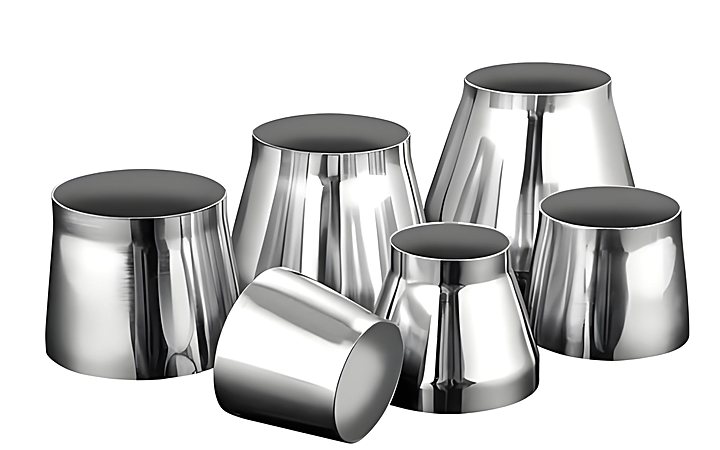
The difference in one sentence each
A concentric reducer is a symmetrical cone with both ends on the same axis. An eccentric reducer has one side flat, so the two ends are offset. That flat side is what prevents a pocket forming where gas or solids can accumulate.
Selection by service and orientation
| Situation | Correct choice | Reason |
|---|---|---|
| Vertical line, any service | Concentric | No pocket can form on a vertical axis |
| Horizontal pump suction | Eccentric, flat side up | Prevents an air pocket entering the pump |
| Horizontal line with settled solids | Eccentric, flat side down | Allows solids to travel rather than collect |
| Steam or condensate horizontal line | Eccentric, flat side down | Allows condensate to drain |
| Clean fluid, horizontal, no pocket risk | Concentric | Simpler and cheaper |
| Instrument connections and vents | Concentric or eccentric per detail | Follow the piping detail |
Mistakes seen on site
- Installing the eccentric reducer upside down. This creates exactly the pocket it was meant to prevent.
- Marking the orientation only on the isometric. Add a note or an orientation mark on the fitting itself.
- Using a concentric reducer on pump suction because it was in stock.
- Ignoring the straight length requirement downstream of the reducer before a flow meter.
Specifying reducers
State ASME B16.9, concentric or eccentric, the two nominal sizes and the wall thickness or schedule for each end, the material specification and UNS number, and the end preparation to ASME B16.25. For eccentric reducers, state the orientation required on the drawing so the installer does not have to guess.
Questions about this topic
Why is a concentric reducer bad on pump suction?
Which way should the flat side face?
Are eccentric reducers more expensive?
Questions about our products
What products does Hangbo Alloy supply?
Which alloy grades are available for these products?
What sizes, wall thicknesses and pressure classes can you supply?
Which material and dimensional standards do you work to?
Is there a minimum order quantity?
What inspection and certification is issued with the goods?
What are typical lead times?
How are the products packed for export?
How do I request a quotation or a sample?
Talk to an engineer
Share your duty conditions and we will shortlist candidate alloys within one working day.